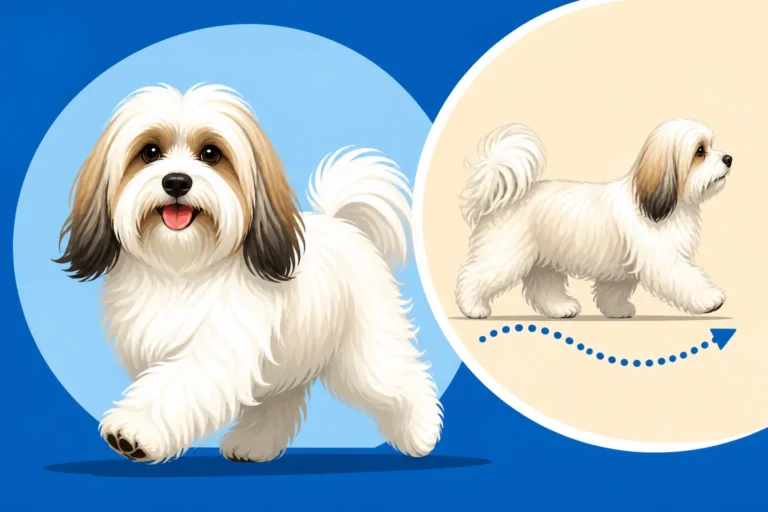
Whether a Havanese Is Healthier Than a Shih Tzu
A Havanese may seem healthier than a Shih Tzu because it has a less flattened face, but breed alone cannot predict an individual dog’s health. Both can live long lives and both have inherited risks. This guide compares their common vulnerabilities, explains what to ask a breeder or veterinarian, and helps you think about the day-to-day care each breed may need.
What “healthier” means when comparing these breeds
A breed comparison is about risk, not a guarantee
There isn’t one simple score that tells you whether a Havanese or Shih Tzu is healthier. Each breed can be affected by inherited conditions, ordinary age-related problems, and health issues that have little to do with breed. A carefully bred dog with good preventive care may stay healthier than a dog whose breed is often described as robust but whose individual health history is poor.
It helps to separate a few questions: Which conditions are more closely associated with each breed? How might a dog’s build affect comfort and daily care? And what do the parents’ health records tell you about the puppy in front of you? Those answers are more useful than assuming every Havanese is healthy or every Shih Tzu will develop breathing trouble.
The Havanese has a moderate muzzle rather than the notably shortened face typical of the Shih Tzu. That distinction matters: short-faced dogs can be more vulnerable to breathing difficulty and heat intolerance. But it does not mean every Shih Tzu has a serious airway problem, or that a Havanese cannot become overheated or develop another significant illness.
The main differences owners are weighing
The Shih Tzu’s facial structure can make breathing and heat management an important part of its care. Its prominent eyes can also be more exposed to irritation or injury. The Havanese does not share the same degree of facial shortening, so those particular structural concerns may be less central, but it has its own possible inherited problems, including kneecap issues and certain eye conditions.
Both breeds are small, long-coated companions. Both may need consistent grooming and dental care, and both can have orthopedic problems. Their specific risk patterns differ, but they overlap enough that “Havanese versus Shih Tzu” is not a choice between a perfectly healthy breed and an unhealthy one.
| Health consideration | Havanese | Shih Tzu |
|---|---|---|
| Breathing and heat | Not typically as short-faced; still needs sensible heat precautions | Shorter facial structure can make breathing and cooling more challenging |
| Eyes | Inherited eye conditions are a concern; routine checks matter | Prominent eyes may be more exposed to irritation or injury |
| Knees and mobility | Kneecap problems and other orthopedic concerns can occur | Kneecap and other joint problems can occur |
| Back | Disc disease is possible, though it is not inevitable | Disc disease and back discomfort can be important concerns |
| Teeth | Small mouths can lead to crowding and dental disease | Small mouths can also be crowded and need regular dental care |
| Individual outlook | Depends on genetics, body condition, preventive care, and chance | Depends on genetics, body condition, preventive care, and chance |
For a broader look at the Havanese’s overall health profile, see Why the Havanese Is a Healthy Toy Breed Anyway. For a direct comparison of temperament and build, The Havanese Against the Shih Tzu can help place health differences in the context of everyday ownership.
Health concerns that matter for both breeds
Knees, hips, and comfortable movement
Luxating patella, often called a slipping kneecap, can affect small dogs, including Havanese and Shih Tzus. A dog may briefly skip on a hind leg, then resume walking as if nothing happened. That can be easy to dismiss, especially if the dog is playful and doesn’t seem distressed. But repeated skipping, stiffness, reluctance to jump, or a change in gait is worth discussing with a veterinarian.
A vet can examine the knee and assess whether the kneecap moves out of position and how significant the problem appears to be. The next steps depend on the dog’s symptoms and examination findings; not every dog with a slipping kneecap needs surgery. Keeping a dog at a healthy weight and reducing repeated high-impact leaps may support comfort, but neither step replaces an assessment when lameness keeps returning. The Havanese-specific overview The Kneecaps a Havanese Slips explains this concern in more detail.
Hip discomfort can also occur in small breeds. A dog that struggles to rise, hesitates on stairs, or avoids ordinary play may be experiencing pain rather than simply being stubborn or tired. Those signs can have many causes, so a veterinary exam is more helpful than trying to identify a joint condition from appearance alone. You can read more about the topic in Whether a Havanese Gets Hip Dysplasia.
Eyes and dental care deserve regular attention
Havanese can inherit eye diseases, while the Shih Tzu’s more exposed eyes may be vulnerable to everyday irritation and injury. In either breed, squinting, redness, unusual discharge, cloudiness, rubbing at the face, or a sudden change in vision should not be brushed off as a grooming issue. Hair irritating an eye may be one possibility, but it is not safe to assume that is the cause without checking.
Routine eye examinations can help identify some problems before an owner notices an obvious change. Your veterinarian can advise on an appropriate schedule based on your dog’s age, health, and family history. For Havanese-specific information, see The Eye Diseases a Havanese Inherits and Whether a Havanese Needs a Yearly Eye Exam.
Dental health is another shared concern. Small jaws can leave less room for teeth, and crowded teeth may trap food and plaque. A dog might continue eating even with sore gums or a painful tooth, so appetite alone is not a reliable sign that its mouth is comfortable. At home, tooth brushing with dog-safe products can help; veterinary dental checks are important too. More on this issue is available in Dental Crowding in a Havanese Mouth.
Back problems and the effect of body condition
Intervertebral disc disease, or disc disease, can cause back pain, weakness, or difficulty walking. It may develop suddenly or appear as gradual changes in movement. A dog that cries when lifted, holds its back stiffly, trembles, or becomes unsteady needs veterinary attention. Sudden weakness or inability to walk is urgent; avoid encouraging the dog to jump or climb while arranging care.
Disc disease is not inevitable in either breed. A dog’s genetics, body condition, activity, and other individual factors all matter. Avoid treating a small dog as though its size makes falls and repeated jumps harmless. Ramps or steps can reduce the need to leap onto furniture, provided the dog can use them safely and they do not introduce a slipping risk.
Extra weight can make movement harder and put additional strain on joints. Your vet can help you assess body condition and choose a feeding plan that fits your dog’s age and activity. If you use Chewy or another retailer to obtain your dog’s regular food, keep the product and feeding routine consistent unless your veterinarian recommends a change. The Havanese-specific discussion Whether a Havanese Gets Disc Disease offers more detail about that risk.
Why the Shih Tzu’s build changes the comparison
Breathing and heat need special attention
The Shih Tzu’s shortened muzzle can affect airflow. Some dogs may snore or make noisy breathing sounds, but loud or labored breathing, fainting, distress during mild activity, or an inability to settle after exertion should not be written off as “normal for the breed.” A veterinarian can evaluate whether a dog’s breathing is comfortable and whether its facial anatomy is contributing to a problem.
Heat deserves extra caution. A Shih Tzu may have a harder time cooling itself through panting than a dog with a longer muzzle, and warm weather can turn a routine walk into a risk. Choose cooler parts of the day, provide shade and water, and stop activity if the dog shows signs of distress. A long coat is not a substitute for sensible heat management, and shaving the coat does not correct an airway problem.
Havanese owners should be careful in hot weather too. No small dog should be pushed through exercise when it is struggling, and individual tolerance varies. The difference is that a Shih Tzu’s facial structure can make breathing and cooling a more prominent part of the health discussion.
Eye exposure and grooming are not the same problem
The Shih Tzu’s prominent eyes can be more exposed to scratches, irritation, and trauma. Owners should pay attention to changes in blinking, squinting, redness, tearing, or rubbing. If a dog suddenly holds an eye closed, seek prompt veterinary advice rather than waiting to see whether routine cleaning fixes it.
Havanese owners also need to keep an eye on eye health. Long facial hair can fall toward the eyes, but trimming or tying hair back does not prevent inherited eye disease. If there is persistent discharge or redness, it is better to have the cause checked than to rely on a grooming adjustment alone.
Both breeds need coat care, and that can create a familiar frustration: it’s easy to mistake a hair-related nuisance for a medical issue, or vice versa. Keep hair out of the eyes in a gentle, safe way, but don’t let grooming become a reason to delay care for discomfort. If you use a retailer such as Chewy to restock basic grooming supplies, remember that those supplies support routine care; they do not replace an eye exam when symptoms appear.
How to choose and care for an individual dog
Ask about health history, not just the breed label
When speaking with a breeder, ask what health screening has been done on both parents and request to see documentation. Ask about recurring issues in close relatives, including eye problems, knee concerns, breathing difficulties, and back problems. A thoughtful breeder should be willing to discuss both the strengths and vulnerabilities of the line rather than promising that a puppy will never become ill.
A puppy’s examination is useful, but it cannot rule out every inherited or later-developing condition. Ask what veterinary checks the puppy has received and what follow-up is recommended. If you are adopting an adult dog, request available medical records and ask about past limping, eye treatment, dental work, breathing symptoms, or episodes of back pain.
The Havanese is often described as long-lived, but a breed’s typical lifespan is not a promise for any one dog. The Fourteen to Sixteen Years a Havanese Lives provides context for the breed’s longevity, while What Havanese Are Most Often Treated For can help you understand the kinds of health issues owners may encounter.
Build a simple prevention routine
For either breed, a practical routine starts with regular veterinary checkups, dental care, an appropriate diet, and attention to changes in movement, breathing, and vision. Keep notes if a symptom comes and goes. For example, “skips after running, then walks normally” is more useful to your veterinarian than “sometimes walks funny.” A short video of an episode may also help, if you can capture it without delaying care.
At home, make it easier for a small dog to move safely. Keep nails and paw hair maintained as advised by your groomer or veterinary team, use secure footing where floors are slippery, and consider a stable ramp or step if jumping is becoming difficult. Avoid forcing a dog to exercise through limping or abnormal breathing. The goal is not to wrap the dog in cotton wool; it is to notice a change early and respond sensibly.
A consistent feeding and dental routine can be easier when supplies are planned ahead. If Chewy is where you normally purchase food or dog-safe dental-care products, check that any product is appropriate for your individual dog and follow veterinary guidance, especially if your pet has a medical condition. Chewy can help with access to routine supplies, but decisions about symptoms, diagnosis, and treatment belong with your veterinary team.
So, is a Havanese healthier than a Shih Tzu?
A Havanese may have an advantage in some areas because it does not typically have the Shih Tzu’s same degree of short-faced anatomy. That can make breathing and heat concerns less central for many Havanese. But the Havanese still has potential inherited health issues, including knee, eye, and other orthopedic concerns. Shih Tzus may have their own particular vulnerabilities, especially around breathing and exposed eyes, but an individual dog’s health can differ considerably from breed-level expectations.
If you are choosing between the two, consider the specific dog’s health history, the parents’ screening, the quality of veterinary care, and whether you can meet the breed’s grooming and daily-care needs. Ask a veterinarian about any concerns you see rather than relying on breed reputation alone. The healthiest choice is not automatically one breed over the other; it is the individual dog whose needs you understand and can support over a lifetime.
Disclaimer
This article is for general informational purposes only and does not constitute professional advice. Laws, prices and regulations vary by location and change over time. Consult a qualified professional for guidance on your specific situation.