Why the Havanese Learns Tricks Faster Than Most Toys
It’s a common misconception that all small dogs are just fluffy lap warmers, content with a simple existence of cuddles and occasional walks. While Havanese certainly excel in the cuddle department, anyone who has spent time with one quickly discovers there’s a vibrant, intelligent mind behind those soulful eyes. If you’ve ever wondered why your Havanese seems to pick up new tricks with astonishing speed, or why they're so eager to show off their latest skill, you're not imagining things. This guide will explore the fascinating reasons behind the Havanese's remarkable aptitude for learning tricks, far outstripping many of their toy breed counterparts.
The Historical Roots of the Havanese's Intellect
Understanding why Havanese are so quick to learn tricks requires a little trip back in time to their origins. They weren't just bred to be pretty faces; they had a very specific, and quite demanding, role in Cuban society. This history is deeply ingrained in their DNA and manifests in their impressive trainability today.
A Legacy of Performance and Companionship
Imagine the grand homes of the Cuban aristocracy centuries ago. These families lived lives of leisure and sought constant entertainment and companionship. This is where the ancestors of our modern Havanese truly shone. They weren't working dogs in the traditional sense, herding sheep or guarding estates, but they were certainly working to charm and entertain their noble companions. Their value wasn't just in their soft coats or loving nature, but in their ability to engage, delight, and perform.
This societal expectation meant that dogs who were more intelligent, more responsive, and more eager to interact with their human families were highly prized. Over generations, this naturally selected for traits like quick wit, an innate desire to please, and a capacity for complex learning. They had to be intelligent enough to understand nuanced human cues, and charismatic enough to hold attention. It was a subtle form of selective breeding that cultivated their mental prowess just as much as their physical beauty.
The "Circus Dog" Brain and Its Modern Impact
The Havanese is often referred to as "the little white dog of Havana" or "Havana Silk Dog," but another nickname that truly captures their spirit is "the circus dog." This isn't just a whimsical label; it's a testament to their historical role. During periods of economic hardship, many Havanese, or their direct ancestors, found themselves performing in traveling circuses and variety shows across Europe. Their agility, intelligence, and eagerness to please made them perfect candidates for learning elaborate routines.
Think about the kinds of tricks circus dogs perform: walking on their hind legs, balancing objects, jumping through hoops, or even intricate dance steps. These are not simple commands; they require concentration, body awareness, and a keen understanding of sequential actions. This legacy has left an indelible mark on the breed. Modern Havanese inherit this "circus dog brain," which means they often come pre-programmed, so to speak, with a natural inclination for showmanship and an ability to grasp complex cues quickly. You'll find a lot more about this fascinating aspect of their history in The Circus Dog Brain Inside a Havanese.
Innate Breed Characteristics That Foster Quick Learning
Beyond their historical background, several intrinsic breed characteristics contribute to the Havanese’s remarkable ability to learn tricks at an accelerated pace. These are traits that many Havanese owners recognize and cherish in their daily lives with their furry companions.
Eagerness to Please and Strong Human Bond
If you own a Havanese, you know they are utterly devoted to their people. They’re often affectionately called "Velcro dogs" because they stick so closely to their owners, following them from room to room. This isn't just about seeking proximity; it's about a deep, intrinsic desire to be involved and to please. This profound bond is arguably the single most powerful motivator for a Havanese when it comes to training and learning tricks.
When your Havanese looks at you with those adoring eyes, they’re not just waiting for a treat; they’re trying to understand what you want from them, and how they can make you happy. This eagerness to please makes them incredibly receptive to instruction. They genuinely enjoy the interactive process of learning with you, and the reward of your praise and affection is often as potent as any tasty morsel. This strong connection makes them highly attuned to subtle human cues, body language, and vocal inflections, all of which are critical in effective trick training. We delve deeper into this attachment in Why a Havanese Follows You Into Every Room.
High Motivation and Problem-Solving Skills
While some toy breeds might be content to simply nap on the couch, Havanese possess a surprisingly sharp mind and a high level of intrinsic motivation. They are not content to be mere passive observers; they want to engage with their environment and, more importantly, with you. This translates into a natural curiosity and an eagerness to figure things out, which are hallmarks of a good problem-solver.
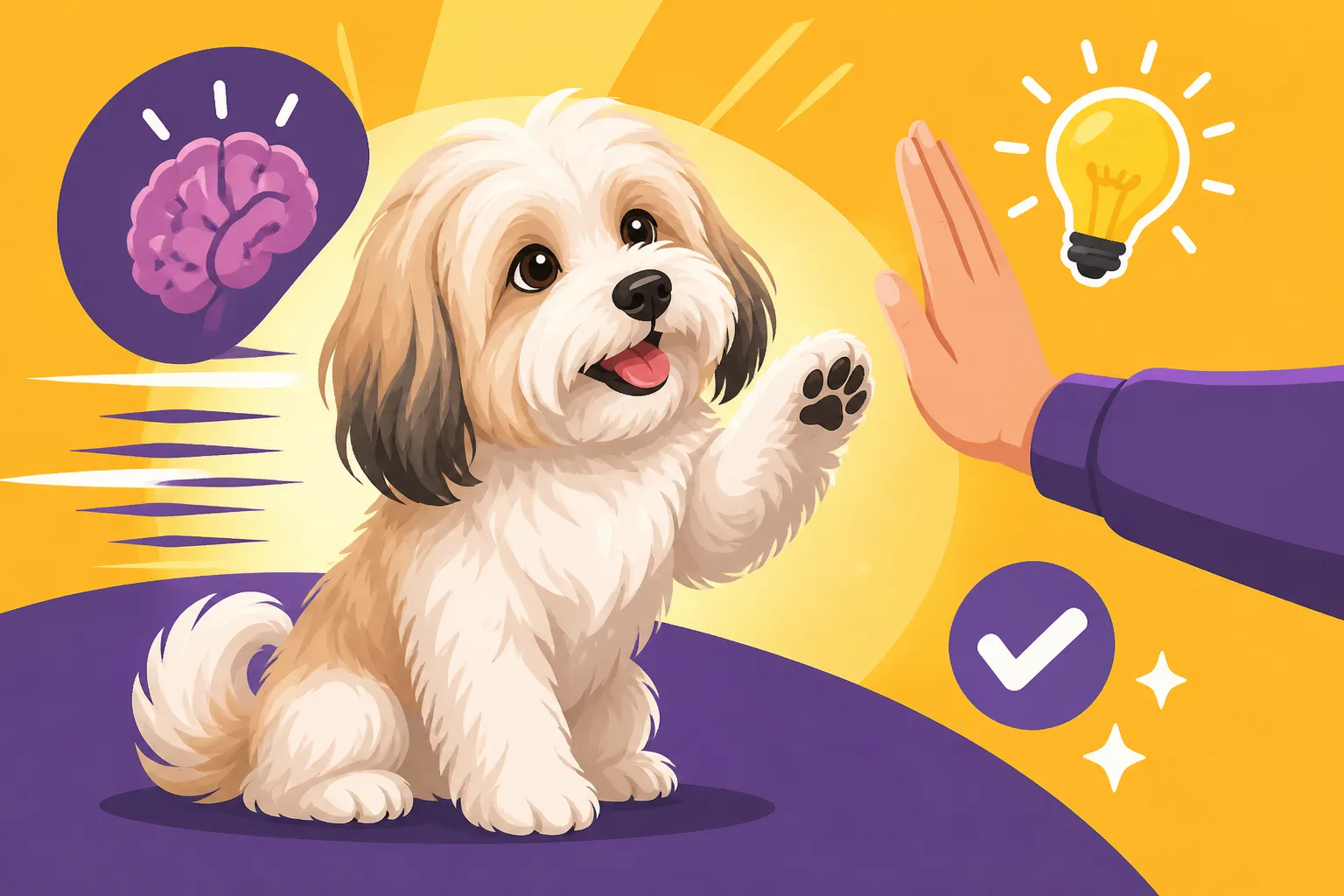
When faced with a new trick, a Havanese often doesn't just wait for you to guide them physically; they'll often try different behaviors, observing your reactions, to understand what earns them a reward. This intelligent approach to learning, combined with their desire for engagement, means they are not only capable of understanding complex sequences but also enjoy the mental challenge. They thrive on having their brains put to work, making them ideal candidates for advanced trick training and mental stimulation games.
Attention Span and Focus
One might assume that a small dog with a playful personality might have a short attention span, but this is often not the case with the Havanese, especially when they are engaged in an activity they enjoy. While they certainly have bursts of energy and playfulness, they also demonstrate a commendable ability to focus during training sessions. This focus is particularly evident when the training is interactive and rewarding.
Compared to some other toy breeds that might be more easily distracted by environmental stimuli or have a more independent streak, the Havanese tends to lock onto their handler during training. Their gaze will often be fixed on you, anticipating your next command or cue. This sustained attention allows for more effective communication and faster learning, as they are truly present in the moment and dedicated to the task at hand.
The Role of Training Methods and Environment
Even the smartest dog can struggle if the training methods aren't right. For Havanese, certain approaches unlock their full potential and make the learning process a joyful experience for both dog and owner.
Positive Reinforcement and Engaging Training Styles
The Havanese absolutely blossoms under positive reinforcement. Harsh corrections or punitive methods are not only unnecessary but counterproductive for this sensitive and intelligent breed. They respond beautifully to rewards such as small, high-value treats, enthusiastic praise, and playful interactions. When training feels like a fun game, their natural enthusiasm for learning shines through.
This breed genuinely enjoys the process of earning a reward, whether it's a piece of boiled chicken or a happy, excited "Good boy!" from their favorite human. Incorporating toys they love, like a soft tug toy or a squeaky ball, into training can also be incredibly motivating. Many owners find great success with clicker training, which provides clear and immediate feedback, allowing the Havanese to quickly understand exactly which action earned the reward. You can easily find various clickers and training treats on platforms like Amazon to enhance your sessions. To learn more about what motivates them, check out What a Havanese Will Work For.
Short, Frequent Sessions and Varied Tasks
While Havanese have a good attention span, they are still dogs, and like all dogs, they benefit from shorter, more frequent training sessions rather than long, drawn-out ones. Aim for sessions that last anywhere from 5 to 10 minutes, conducted several times a day. This approach keeps them engaged, prevents boredom, and helps solidify learning without becoming tiresome. Ending a session on a high note, even if it's just after a successfully performed simple trick, leaves them feeling accomplished and eager for the next one.
Varying the tasks and tricks also keeps their intelligent minds stimulated. Don't just drill the same trick repeatedly. Once they've grasped a concept, move on to a variation or a new trick, then revisit older ones later to keep them fresh. This variety not only builds their repertoire but also strengthens their overall learning capacity. For more insights on optimal session lengths, see Whether Short Sessions Suit a Havanese.
Early Socialization and Exposure to Learning
The foundations for quick trick learning are often laid long before formal training begins. Early socialization, starting in puppyhood, is paramount. Exposing a Havanese puppy to a wide variety of sights, sounds, people, and other friendly dogs helps them develop confidence and resilience. A well-socialized puppy is less likely to be fearful or overwhelmed in new situations, which frees up their mental capacity for learning.
Puppy classes are an excellent way to introduce your Havanese to a structured learning environment in a fun, positive way. These classes not only teach basic obedience but also expose puppies to novel stimuli and encourage interaction. Many online puppy programs, such as those offered by BAXTER & Bella, provide comprehensive guides and support that can be invaluable for new owners, helping to establish good habits and a love for learning from the very start. The importance of their initial development is explored in The First Year With a Havanese Puppy.
Common Tricks Havanese Excel At and Why
Given their history and inherent traits, it's no surprise that Havanese tend to excel at a wide array of tricks. From basic obedience to intricate performances, they approach learning with enthusiasm and often surprise their owners with their capabilities.
Foundational Obedience as a Stepping Stone
Before any Havanese can become a trick-performing superstar, they first master foundational obedience commands like "sit," "stay," "come," and "down." What sets the Havanese apart is how quickly and reliably they often grasp these basic commands. Their eagerness to please and strong desire to bond with their owner means they are highly motivated to respond.
This solid foundation isn't just about good manners; it's a crucial stepping stone for more complex tricks. A dog that understands and reliably performs a "stay" can then learn to "wait" while an object is placed on their nose, or to "stand" still for a costume. The speed with which a Havanese builds this foundational obedience allows owners to move on to more exciting trick training much sooner than with many other breeds, giving them a real head start.
Complex Chains and Sequential Behaviors
The Havanese's intelligence truly shines when it comes to learning complex chains of behaviors or tricks that require multiple steps. Think about teaching a dog to weave through your legs, to retrieve a specific toy by name, or even to perform a little "dance" routine. These aren't isolated actions; they require memory, understanding of order, and the ability to link several cues together.
Their innate problem-solving skills and their capacity for understanding cause and effect contribute significantly here. They don't just mimic; they genuinely learn the sequence. This ability makes them fantastic candidates for dog sports like obedience, rally, or even freestyle heelwork, where intricate routines are the norm. The Havanese Learns Tricks Faster Than Most Toys, particularly those that involve multiple steps and cues.
Showmanship and Crowd-Pleasing Tricks
Remember that "circus dog" lineage? It's alive and well in the modern Havanese, who often possesses a natural flair for showmanship. They seem to understand when they've done something impressive, and they absolutely revel in applause and attention. This makes them superb at crowd-pleasing tricks like "play dead," "bow," "wave," or even "spin."
When a Havanese performs a trick, they don't just go through the motions; they often add their own adorable flourish, a little tail wag or a head tilt that enhances the performance. Their love of being the center of attention is a huge asset. They want to connect with their audience, whether it's just their family or a room full of strangers. This intrinsic motivation to entertain means they practice these tricks with gusto, knowing a shower of praise is just around the corner. You'll definitely see this characteristic come alive in Whether a Havanese Shows Off for an Audience.
Comparing Havanese to Other Toy Breeds
While all dogs are individuals and capable of learning, the Havanese generally holds a distinct advantage over many other toy breeds when it comes to the speed and complexity of trick acquisition. It's not about one breed being "better" than another, but about understanding their unique predispositions.
Distinguishing Havanese from Less Trainable Toys
It's important to clarify that "less trainable" doesn't mean "unintelligent" or "bad dogs." It simply means that some breeds, due to their historical purpose or genetic makeup, might have different motivations or learning styles. For example, some toy breeds were exclusively bred for lap warming, with less emphasis on interactive performance, leading to a more independent or less "eager to please" disposition in some lines. Others might be more easily overwhelmed by new stimuli, making sustained focus challenging.
Havanese, with their history of interactive companionship and performance, possess a higher intrinsic drive to engage in structured learning activities with their human partners. This doesn't mean a Maltese or a Shih Tzu can't learn tricks, but a Havanese often approaches the task with a more fervent enthusiasm and a quicker grasp of the desired behavior, which can be a pleasant surprise for new owners. If you're curious about their overall intelligence, Whether the Havanese Is the Smartest Toy Breed offers more context.
Speed of Acquisition and Retention
One of the most remarkable aspects of Havanese trick learning is their speed of acquisition. Owners frequently report that their Havanese can pick up a new trick in just a few short sessions, sometimes even within a single session if it's a simpler behavior. They seem to make connections quickly, understanding what's being asked of them with relatively few repetitions.
Furthermore, their retention is excellent. Once a Havanese has learned a trick, it often sticks in their memory for a long time, even if they haven't practiced it regularly. You might pull out a trick they haven't done in months, offer the cue, and they'll perform it with minimal prompting. This high retention rate makes training very rewarding, as you're constantly building on existing knowledge rather than having to re-teach from scratch. For more on this, check out How Fast a Havanese Learns a New Trick.
Adaptability to Different Training Contexts
The Havanese's quick learning extends to their adaptability across various training contexts. They can excel in the casual, fun environment of home trick training, learning to wave hello or fetch slippers. But they also shine in more structured settings like formal obedience classes, rally, or even agility, where precise movements and quick thinking are essential.
This versatility means that a Havanese can be a fantastic partner for almost any dog sport or activity that involves learning and interaction. Their intelligence isn't limited to a single type of task; they seem to genuinely enjoy applying their mental faculties to whatever challenge is presented. This adaptability is a testament to their well-rounded intelligence and their desire to participate actively in their human's life.
Maximizing Your Havanese's Trick Potential
While Havanese are naturally gifted learners, every dog benefits from a thoughtful and consistent approach to training. Here's how you can best harness your Havanese's trick-learning potential.
Consistency and Patience Are Key
Even with the smartest Havanese, consistency remains the cornerstone of effective training. Dogs thrive on routine and clear expectations. If you use the same cue for a trick every time, and consistently reward the correct behavior, your Havanese will learn much faster and more reliably. Inconsistent cues or variable rewards can be confusing and slow down the learning process.
Patience is equally vital. There will be days when your Havanese might seem distracted or less enthusiastic. On those days, it's best to keep sessions very short, focus on easy, known tricks, or even take a break. Never get frustrated or angry; this can damage the trust and enthusiasm for learning. Remember that they are eager to please, and positive reinforcement builds confidence. If you encounter a moment of stubbornness, which can happen with any intelligent dog, Whether a Havanese Is Ever Stubborn might offer some relatable advice.
Mental Stimulation Beyond Formal Tricks
While trick training is excellent mental exercise, it shouldn't be the only way you engage your Havanese's brain. These intelligent little dogs need constant mental stimulation to prevent boredom and keep their minds sharp. Puzzle toys, especially those that dispense treats, can be a fantastic way to challenge them independently. Scent work games, where they have to find hidden treats or toys, also tap into their natural instincts and provide a rewarding mental workout.
Interactive play, like fetch or tug, can also incorporate elements of learning, such as "leave it" or "drop it." The goal is to provide a rich and varied environment that encourages thinking and problem-solving. A mentally stimulated Havanese is a happy, well-behaved Havanese, and they'll be even more receptive to learning new tricks when their brain is regularly exercised. For more ideas, take a look at Whether a Havanese Enjoys Puzzle Toys.
Recognizing Your Havanese's Limits and Preferences
While Havanese are generally enthusiastic learners, it's crucial to remember that each dog is an individual. Observe your Havanese's body language and enthusiasm levels during training. Some might absolutely adore agility, zipping through tunnels and over jumps, while others might prefer the quiet challenge of learning complex obedience routines.
Don't force a trick or activity if your Havanese consistently shows disinterest or discomfort. The goal is to make learning a joyful, bonding experience, not a chore. Celebrate their unique talents, whether it's mastering a dozen complex tricks or simply being the best "sit-stay" champion in the house. Tailoring your training to their individual preferences will ensure they remain engaged and eager to learn for years to come.
Trick Learning Comparison: Havanese vs. Other Toy Breeds (General)
To highlight some of the key differences, here's a general comparison of Havanese trick-learning attributes against a generalized "other toy breed" type that may have different predispositions.
| Attribute | Havanese | Other Toy Breeds (General) |
|---|---|---|
| Eagerness to Please | Very High; strong desire to work with owner. | Variable; can be more independent or less handler-focused. |
| Problem-Solving Ability | High; often tries variations to earn rewards. | Moderate; may rely more on physical guidance or repetition. |
| Attention Span | Good, especially in engaging sessions. | Can be shorter, more easily distracted. |
| Speed of Acquisition | Often rapid; picks up new tricks in few repetitions. | Moderate; may require more repetitions and patience. |
| Retention of Tricks | High; remembers tricks even after long breaks. | Variable; may need more frequent refreshers. |
| Motivation for Training | Strong; praise, treats, and interaction are all key. | Primarily food-motivated; less driven by handler interaction alone. |
| Adaptability to Variety | Excels in diverse trick types and training environments. | May prefer simpler tasks or specific types of training. |
| Showmanship | Natural flair; enjoys performing for an audience. | May perform, but often without the inherent "pizazz." |
This table isn't to say other toy breeds can't learn tricks or be wonderful companions; it simply illustrates why the Havanese consistently stands out in the realm of trick training. Their historical background and innate characteristics have truly set them up for success as enthusiastic, quick-witted learners.
Disclaimer
This article is for general informational purposes only and does not constitute professional advice. Laws, prices and regulations vary by location and change over time. Consult a qualified professional for guidance on your specific situation.